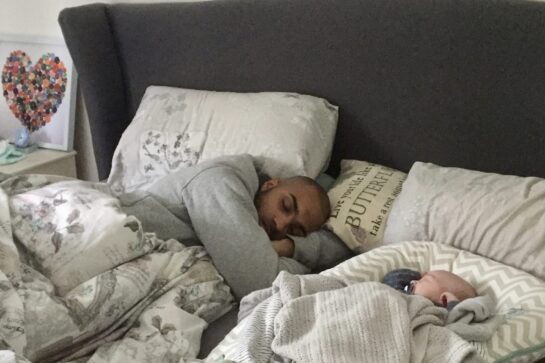

Being a super busy mum of two little ones as well as working full time means I have so much going on in my mind sometimes I forget what day it is. That mixed with the fact that Marlo still isn’t sleeping through the night means my memory is pretty much battered and I often forget little things like what day it is or buying milk, but sometimes I forget slightly bigger things too, such as taking Cameo’s bag to nursery in the mornings or sending an important work email. (I know I’m not the only one – 67% of adults believe their memory has worsened with age – so it doesn’t make me feel as bad!)
Sleep experts TEMPUR® have commissioned a Sleep and Memory survey to discover Brits’ most commonly forgotten things, and investigate the connection between sleep and memory. Ever since having my little ones I’ve realised that lack of sleep really can have an impact on how much information my brain can hold. So what can we do to help us sleep better? (Other than Marlo finally sleeping through the night!)

Here are the top 3 things I’ve put in place to try and get a better night’s sleep.
1. Get a new pillow
You sleep on your pillow, so it’s pretty obvious the better the pillow, the better the sleep! I’ve been using a TEMPUR® pillow for a little while and I’ve never slept on anything like it!
TEMPUR® material is used to make mattresses and pillows that don’t just distribute the weight and pressure like memory foam but actually absorbs it. It’s down to its open cell structure that also allows the material to breathe so no more sweaty head in the night! The material really adapts to your body, so when I pop my head on the pillow it feels like it’s bespoke made for me.
TEMPUR® material has 3% motion transfer versus 20% for normal memory foam, so the difference is huge and basically means that when I move, my pillow kind of stays put. It’s not like I lay on one end of the pillow and the other bit is sticking up trying to suffocate me! It’s incredibly comfortable, a real solid pillow that makes sleeping a lot dreamier! (Plus my husband reckons I’ve stopped fidgeting so much too!)

2. Ditch the tech
I know we’re told this again and again, but it’s worth a try. Ditch the phone, computer and even the TV before bed. Let yourself unwind a bit. Relax and try to clear your mind. Easier said than done I know, but if you don’t shut down your tech an hour before bed, how do you expect your brain to shut down straight away? It’ll be whirring with status updates, emails and what just happened on Love Island. Grab a book, note down your to-do list for the next day (on paper!) or treat yourself to a facemask. (Not Facebook). It won’t always work but can definitely make you feel a little more relaxed.
The TEMPUR® survey found that as many as 53% felt the need to use prompts to remind them to do things, with 45% mentioning that they use to-do lists to do so. When you’re winding down for the evening, this is probably the only purpose that can excuse you for squeezing in extra tech time at the end of the day. Otherwise you’re probably just overloading your head with more information at a time when it doesn’t need it.


3. Move it
OK I’m not saying move house, I mean I’m sure many of us would move away from main roads or temporary road works. But you can move the clutter in your room! Sounds strange right? Maybe it’s just time BUT when my bedroom is tidy and clear from clutter; I really do have a better sleep. I’m not sure if it’s because it’s not hanging over my head and I’m not beating myself up about it – or if it just looks and feels more chilled. Either way, suck it up, get it done and move the clutter!
The people most likely to rate their sleep as good – according to the survey – are those that get over 7 hours each night. If something fixable is getting in the way of it, such as the environment you’re sleeping in, the best way to resolve it is to do a little rearranging.
4. Other Factors That Affect Sleep
External factors, like your bedroom environment and the mattress you use, can certainly affect sleep, so do negative thoughts and emotions. However, if you’ve been having trouble sleeping and staying asleep for quite some time and you are experiencing symptoms such as daytime fatigue, excessive sleepiness during the day, and unusual breathing patterns, what’s keeping you tired and awake may be a sleeping disorder.
Sleep apnea is a sleeping disorder that affects millions of Americans. The condition is characterized by episodes of cessation of breathing that can last 10 to 30 seconds and occur up to 400 times a night. Currently, continuous positive airway pressure (CPAP) therapy with a CPAP machine and mask is the most effective treatment for sleep apnea.
Aside from sleep apnea, insomnia, narcolepsy, restless legs syndrome, and REM sleep behaviour disorder are some of the most common sleep disorders that affect people. Get yourself checked immediately if you suspect you have a sleeping disorder.
*This post is in conjunction with TEMPUR®, but all thoughts are my own